
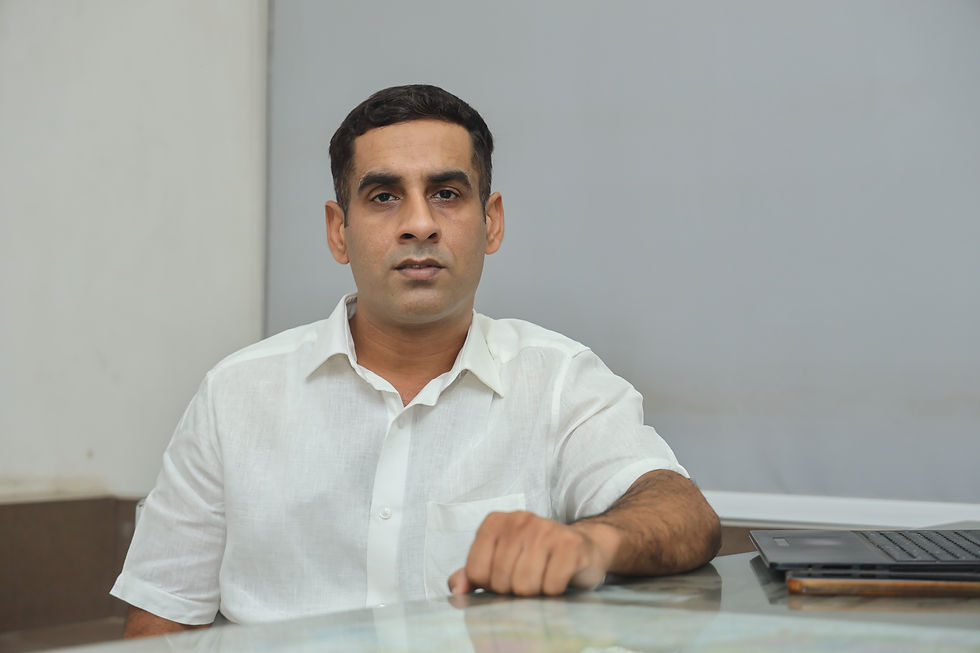
Sohong Dhar leverages his expertise as a Microsoft data scientist to build trusted AI systems that solve dangerous real-world problems.

Sohong Dhar’s work sits at a rare intersection where data science, machine learning, cybersecurity, and digital marketing do not operate in isolation but exist as a connected system. As a data scientist and ML researcher at Microsoft, his thinking has been shaped by years of working with large scale data environments, where patterns are not just observed but translated into decisions that carry real business weight. His approach has never been about treating these domains as separate specializations. Instead, he sees them as layers of a single intelligence loop, one that constantly feeds itself with data, decisions, and feedback.
He began with a simple belief. Business value does not come from tools alone. It comes from how well systems think. Data science forms the analytical base, where raw information becomes insight through statistical modeling and machine learning. AI then turns those insights into predictive systems that guide behavior, automate decisions, and anticipate outcomes. Digital marketing becomes the surface where all of this touches the customer, shaping engagement and measurable results. Cybersecurity quietly runs beneath everything, protecting the integrity of data and keeping the system reliable.
What makes his work stand out is not just theory but application. His patents reflect this thinking in action. From a cyber crime analytical computer that merges threat intelligence with data analytics to a CNN based career forecasting device, his projects show how machine learning can step into real world use cases. One of his more ambitious ideas, an intelligent swarm robotics system for power line inspection, came from a very grounded problem. Manual inspection of infrastructure is dangerous and inefficient. He imagined a system where autonomous units could work together, detect faults, and adapt in real time.

Building that system was far from simple. Coordinating multiple machines without central control required deep work in distributed intelligence. Each unit had to think locally yet contribute to a larger outcome. There were hardware limits, computational tradeoffs, and the constant need for reliability. The system also had to remain secure, since any failure could affect critical infrastructure. Still, the idea pushed forward because it solved something real, reducing human risk while improving accuracy and speed.
Cybersecurity has been another strong focus in his journey, especially with the rise of connected devices. His IoT Network Security Enhancer Device takes a different view compared to traditional systems. Instead of relying on static rules, it builds behavioral profiles for each device. It studies how devices communicate, how often they act, and what patterns they follow. Any deviation becomes a signal. This allows threats to be detected early, even those that have never been seen before. The system works at the edge, keeping decisions close to where data is created, which helps reduce delays and keeps networks stable.
Recognition has followed his work, including the ET Leadership Award 2025 and honors at the World Leaders Summit in Oxford. For him, these are not endpoints. They are markers along a longer intellectual path. He sees them as a reminder that work must remain grounded in both theory and application. There is also a quiet sense of responsibility that comes with it, a push to keep contributing in ways that go deeper than surface level success.
His thinking about AI adoption in business often challenges common assumptions. Many companies treat AI as a replacement for human effort, expecting immediate gains. He views this as a short sighted move. In his view, AI should raise the quality of decisions, not just reduce labor. Without strong data, skilled people, and proper systems, AI becomes just another expensive tool with limited returns. The real shift happens when AI changes how decisions are made, not just how tasks are completed.
Looking ahead, he sees a closer relationship between human thinking and machine intelligence. It will not be a one way interaction. Machines will learn from human behavior, while humans will adjust based on machine insights. This creates a loop where both sides evolve together. “The real challenge is not building smarter machines, but building systems that can reason, explain, and be trusted.” That idea sits at the core of his work.
His background in digital marketing and analytics also shapes how he understands consumer behavior. He draws from economic theory, particularly revealed preference, and combines it with machine learning. Instead of just tracking what people click or buy, he looks at the consistency behind their choices. This helps businesses predict not just what customers might do next, but why they behave the way they do.
Risk, in his world, is never avoided. It is structured and managed. He breaks it into layers, separating data risk, model risk, and system risk so that one failure does not collapse everything. There is also a focus on building systems that can handle worst case scenarios, not just ideal conditions. This mindset allows experimentation without losing control.
For those starting out in AI or cybersecurity, his advice stays grounded. Focus on fundamentals. Mathematics, logic, and reasoning matter more than tools. Technologies will keep changing, but the ability to think clearly and build from first principles stays relevant. He encourages learning by doing, but always with a strong conceptual base.

What he envisions for the future goes beyond data. He believes the next shift will move toward knowledge driven systems, where machines do not just predict but also explain and verify. It is a move toward intelligence that can justify its answers, not just produce them. In that world, trust becomes just as important as accuracy, and systems are judged not only by what they say, but how they arrive there.


Comments