
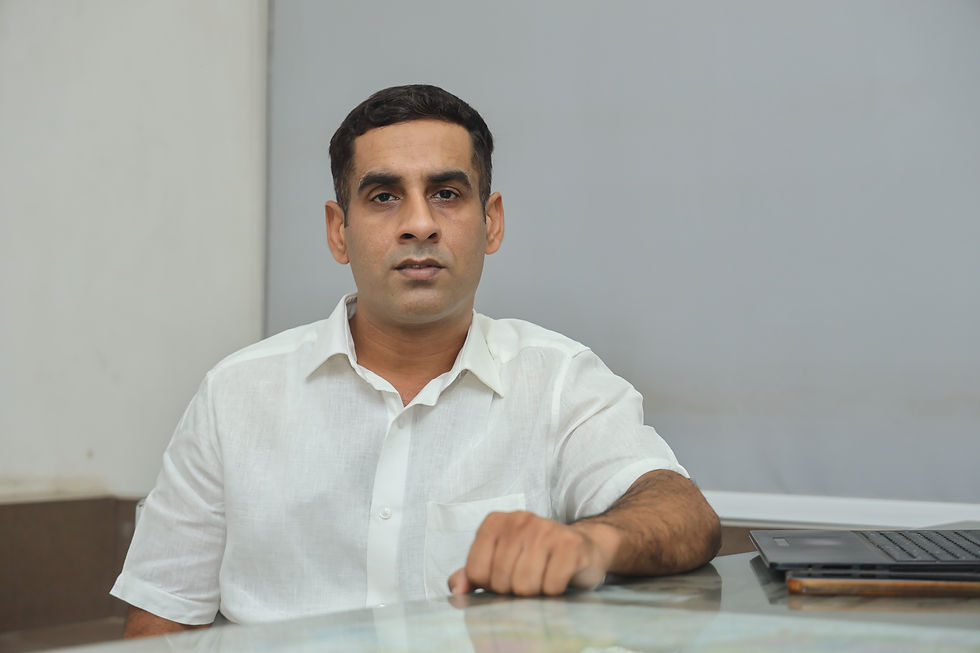
Anurag Rajesh Todi transformed his experience managing Mumbai cafes into a tech-driven hospitality powerhouse fixing hiring and training.

Anurag Rajesh Todi never really saw himself living a predictable life. Even in his early twenties, there was a strong pull toward building something of his own. A fixed routine, working under someone for years, that idea never quite sat right with him. It was not about rejecting jobs as a concept, it was more personal than that. He wanted ownership, pressure, and the kind of uncertainty that comes with trying to create something from scratch. Growing up in a Marwari family, the mindset of doing business was already present somewhere in the background, shaping how he looked at work and risk.
Between 2016 and 2019, he was deeply involved in running and managing cafés, QSRs, and food ventures across Mumbai. That phase gave him a close look at how the hospitality business actually functions behind the scenes. While many people around him were excited to start their own ventures, he kept noticing a common issue. Founders had ideas and funding, but they struggled with hiring the right people and training them properly. That gap stood out again and again, and slowly it turned into the foundation of what he would build next.
Through Anviyaa Hospitality, he began working with restaurants, cloud kitchens, hotels, and hospitality brands to solve these everyday problems. The focus was simple, help businesses find the right staff, train them, and build teams that can perform under real conditions. Over time, the work expanded into operational structuring, SOP setup, and hands on business support. What started as a hiring focused service gradually became something broader. Alongside this, he also began building a voice in the industry through conversations and content, including his podcast, The Hospitality Unfilltered, where the discussions are raw and close to reality.
The early days were far from structured. In fact, almost everything felt uncertain. Getting clients was the hardest part. He did not know how to position his work, who exactly to target, or how to convert conversations into actual deals. It was a phase of learning while already being in the middle of it. There were moments where it felt like time was slipping away just trying to figure things out. Still, those same years became the base for everything that followed.

His journey did not change because of one lucky break. It shifted through a series of intense and personal moments. The first café, backed by his father, gave him a start and a sense of belief. Then came the COVID phase, which hit harder than expected. He tried exploring other ways to earn, including the stock market, and faced heavy losses. It took him years to recover from what was lost in a short span. That period tested him financially and emotionally. His family became his anchor during that time, especially his wife, who stood by him when things were at their lowest.
There was even a phase where he almost stepped away from entrepreneurship completely. He completed his MBA and began looking at job options, thinking that maybe business was not working out. Life shifted again when his daughter was born. That moment brought clarity and a stronger sense of responsibility. Something changed internally, and from that point, he moved with more focus and intent.
Growth came step by step. From working alone to building a team of six to seven people, from operating out of home to having an office, each stage carried its own meaning. Revenue began to grow steadily, and by 2025, word of mouth started bringing in clients. People began recommending his work, and slowly the name started circulating within the hospitality space. Around the same time, his podcast added another layer, opening up honest discussions around hiring, operations, and what really happens behind the business.
Looking at 2026, his thinking has started shifting toward something bigger. The hospitality sector in India is still scattered and unorganized in many ways. He now wants to bring structure through technology driven systems that can simplify hiring, operations, and team building at scale. It is not just about solving individual business problems anymore, it is about creating something that can impact the entire industry.
His first customers did not come through any polished plan. It was pure hustle. Cold calls, walking into restaurants, constant follow ups, using every connection possible, and hearing no repeatedly. That phase built resilience. Once the work started delivering value, referrals slowly followed, and that momentum kept building.

Inside his team, the focus stays simple. Ownership, honesty, speed, and accountability. He does not believe culture comes from office design or slogans. For him, it shows in how people take responsibility and solve problems without being pushed. The environment is practical, focused on getting things done rather than looking impressive.
Family continues to be a strong part of his journey. They stood by him during financial stress, emotional breakdowns, and uncertainty. That support gave him the ability to keep going when stopping felt easier. His wife, in particular, has been a constant presence through every phase, from early struggles to recent growth.
When he talks about success, the definition is grounded. Recognition, stability, and profitability matter more than flashy numbers. He has seen what losses feel like, and that experience has shaped how he thinks today. “Kuch bhi karna hai, but loss nahi karna hai,” he says, a line that carries both simplicity and weight.
His advice to anyone starting out stays direct. Do not start just because others are doing it. Start only if there is a genuine urge to build. Business demands patience, pressure, and consistency. It is not always exciting, and many phases feel slow or uncertain. “The hustle never stops,” he says, and that line sums up his journey as much as his mindset.


Comments